

AI coding assistants have become a permanent part of modern software development.
Developers use them to generate boilerplate, write tests, create database queries, refactor legacy systems, and even implement entire features. According to recent industry surveys, the majority of engineers now rely on AI tools in some form during their daily workflow.
Yet many teams are learning an uncomfortable lesson:
The biggest risk of AI-generated code is not obvious bugs.
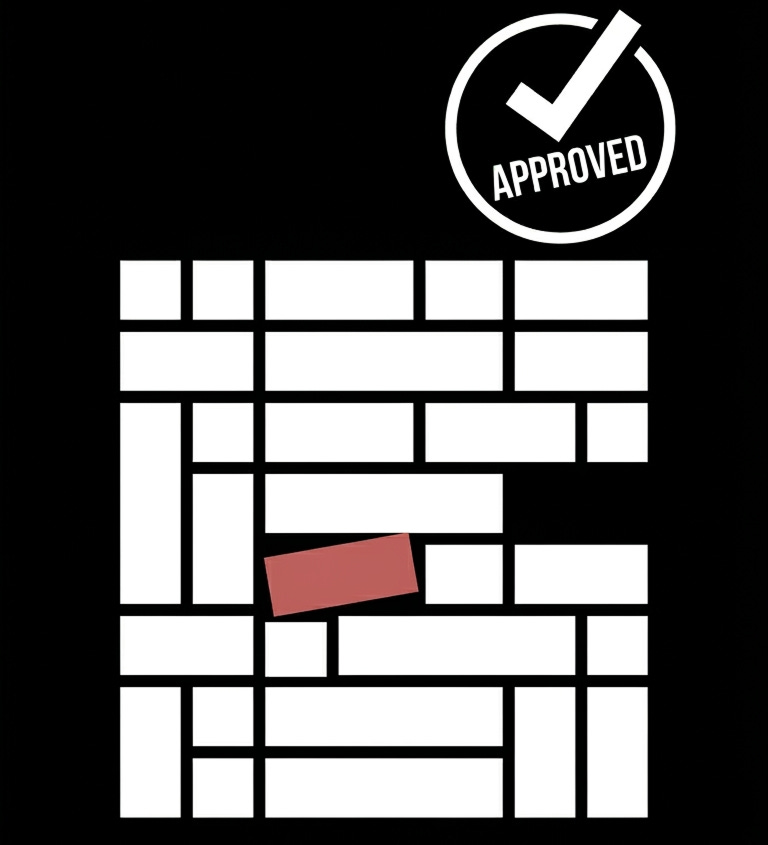
The real danger is code that looks correct.
It passes review.
It passes CI.
It passes automated tests.
And then it fails in production.
The problem isn’t that AI is inherently unreliable. The problem is that most development processes were designed for humans and have not yet adapted to AI-generated output.
What follows are eight recurring anti-patterns that appear across teams using AI-assisted development—and practical ways to prevent them before they become expensive incidents.
1. Automation Bias
The first trap is psychological.
When developers know that code was generated by an AI assistant, they often review it differently.
The pull request looks clean.
Variable names follow conventions.
Formatting is perfect.
Nothing immediately appears suspicious.
As a result, reviewers unconsciously assume the implementation is safe.
This phenomenon is known as automation bias—the tendency to trust automated systems more than our own judgment.
Unfortunately, clean syntax does not guarantee correct behavior.
An AI-generated implementation may still contain subtle authorization flaws, incomplete validation logic, unsafe assumptions, or incorrect business rules.
The solution is simple:
AI-generated code should receive more scrutiny, not less.
Teams should explicitly review business logic, data handling, and security-critical paths regardless of how polished the code appears.
2. Hallucinated Dependencies
One of the most dangerous AI failure modes has little to do with code itself.
It involves packages.
AI models occasionally invent dependency names that sound legitimate.
Developers see an import statement or installation command, assume the package exists, and continue.
Attackers have already realized this creates an opportunity.
If an AI repeatedly invents the same package name, someone can register that package and distribute malicious code through it.
This attack pattern has become known as slopsquatting.
The defense is process-driven:
Verify every new dependency.
Require human approval for package installation.
Use lockfiles and integrity verification.
Review package provenance, maintainers, download history, and signatures.
Treat AI-suggested dependencies exactly as you would treat links received from an unknown sender.
3. Tests That Verify Nothing
Coverage is one of the most misunderstood metrics in software engineering.
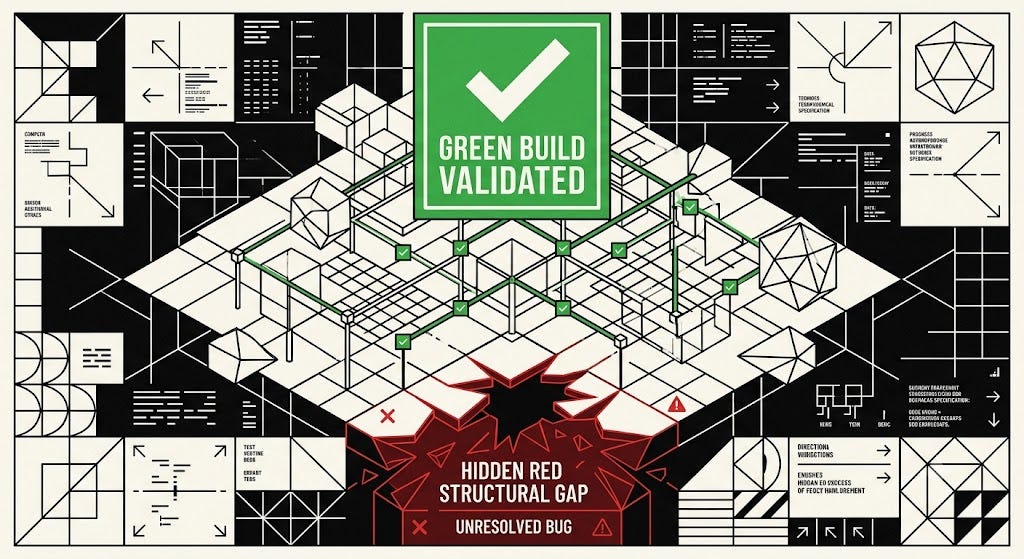
AI-generated tests often maximize coverage numbers while minimizing actual verification.
Common patterns include:
Assertions that only check for non-null values.
Tests that merely verify execution completed.
Excessive mocking.
Snapshot tests that preserve incorrect behavior.
The result is a green pipeline that provides false confidence.
Effective tests validate business behavior, edge cases, and expected outcomes.
A useful technique is mutation testing:
Intentionally break the implementation.
If no test fails, the test suite is providing little protection.
4. Using AI Where Verification Is Expensive
AI performs best when the generated output is easy to verify.
Problems emerge when teams apply it to areas where correctness is difficult to validate.
Examples include:
Financial calculations
Concurrency systems
Security controls
Database optimization
Distributed infrastructure
The issue isn’t model capability.
The issue is verification cost.
If validating correctness requires deep expertise, AI should be treated as a brainstorming tool rather than a source of truth.
5. Scope Creep and Interface Drift
Most developers have experienced this.
A simple request becomes:
“While we’re here, let’s improve this.”
Then:
“Let’s refactor this section too.”
A small change gradually becomes a massive pull request spanning multiple modules.
AI assistants encourage this behavior because they naturally suggest additional improvements.
The result is larger diffs, reduced review quality, and increased risk.
The fix is disciplined scoping:
One problem.
One change.
One pull request.
6. Mock Data That Reaches Production
Mock data is useful during development.
It becomes dangerous when it survives deployment.
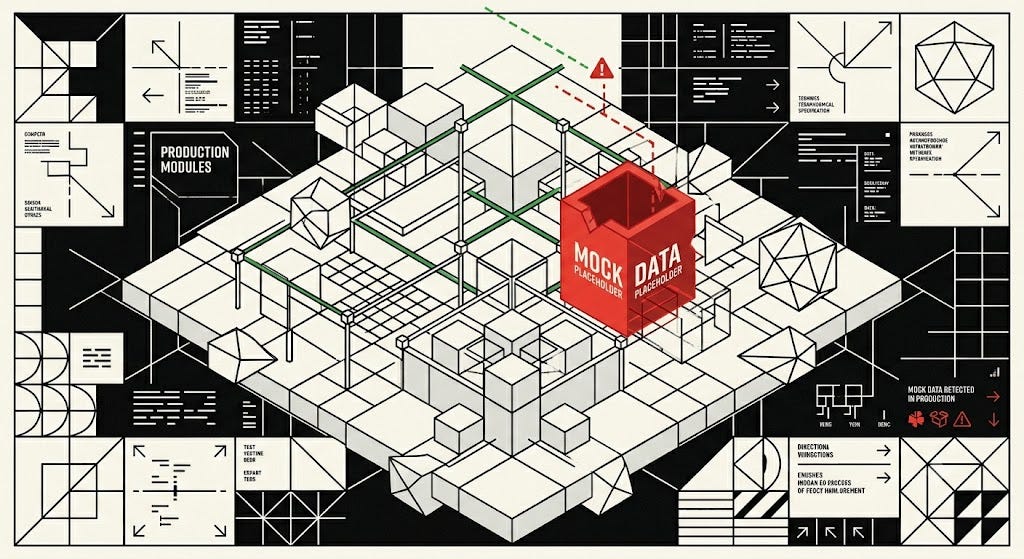
AI-generated prototypes frequently contain placeholder values, fake responses, and temporary shortcuts.
Because everything appears to work locally, these artifacts are easy to overlook.
Teams should establish automated checks that detect temporary markers and prevent them from reaching production environments.
If a feature has only been validated against mocks, it has not truly been validated.
7. Context Rot
AI assistants do not remember project rules the way humans do.
In long conversations, earlier constraints gradually lose influence.
Toward the end of a session, the model may begin suggesting:
Deprecated APIs
Old architecture patterns
Previously rejected solutions
The longer the interaction, the more likely this becomes.
Successful teams avoid relying on conversational memory.
Instead, they store critical rules in persistent project documentation such as:
CLAUDE.md
AGENTS.md
Cursor rules
Architecture guides
The source of truth should live outside the chat.
8. Architecture Built One Prompt at a Time
Perhaps the most subtle AI anti-pattern is architectural degradation.
Every pull request looks reasonable.
Every function appears well written.
Yet over time the system becomes increasingly fragmented.
Why?
Because AI optimizes locally.
Architecture requires global thinking.
Without explicit boundaries, systems slowly drift toward:
God services
Duplicate logic
Blurred module ownership
Increasing coupling
This is why architectural decisions should be documented and reviewed independently of feature implementation.
AI can build inside boundaries.
Humans must define those boundaries.
Conclusion
The biggest misconception about AI-generated code is that its primary risk is bad code.
In reality, its greatest danger is believable code.
Code that looks professional.
Code that feels finished.
Code that earns quick approval.
Modern engineering is no longer about generating software faster.
AI already does that.
The new challenge is determining which generated changes deserve trust.
The strongest teams are not the ones using the most AI.
They are the ones that have built the best systems for questioning it.