
Friday Links #41: TypeScript 7, Bun, AI Agents and More
This week's roundup covers the launch of TypeScript 7, the latest Node.js and Bun releases, new developer tools, AI coding breakthroughs, open source projects, and the web development stories worth yo


Another week, another wave of releases across the JavaScript ecosystem.
🧠 Language & Runtime Updates
TypeScript 7.0
The biggest release of the week is finally here. TypeScript 7 has officially landed, introducing the long-awaited Go-based compiler that’s designed to dramatically reduce compilation times, especially for large codebases.
It’s still early days, though. Much of the ecosystem continues to target TypeScript 6 while tooling authors update plugins, language servers, and build integrations. If you’re planning to upgrade, it’s worth checking compatibility with your existing toolchain first.
npm 12
npm has reached another major milestone with the release of version 12.
The new version includes CLI improvements, dependency management updates, performance refinements, and plenty of internal cleanup. While there aren’t many headline-grabbing features, it’s an important release that lays the groundwork for future improvements across the Node.js ecosystem.
Bun 1.3.14
Bun continues its rapid release cadence. Version 1.3.14 focuses primarily on bug fixes, compatibility improvements, and runtime performance.
The Bun team also published one of the most interesting engineering stories of the year: a detailed write-up explaining how the runtime is being rewritten from Zig to Rust using dozens of parallel Claude Code sessions. The Rust implementation will become the foundation of Bun 1.4.
Node.js 26.5.0
Node.js 26 continues to evolve with another feature-packed release. Version 26.5 adds support for importing text files using ESM import attributes, making it easier to work with non-JavaScript assets without custom loaders.
The release also introduces blob.textStream() along with several smaller improvements across the runtime, performance, and platform APIs.
📜 Articles & Tutorials
LiteRT.js, Google’s high performance Web AI Inference
6 security settings every GitHub maintainer should enable this week
How to Read Large JSON Files Without Losing Your Mind
Building Persistent Page Transitions with WebGPU and Vanilla JavaScript
SolidJS 2.0: A React Developer’s First Look at Signals and Async
How to create awesome staggered animations in CSS, Color.js v0.7.0
Password Hashing Done Right: Argon2, bcrypt, Salt and Pepper
Next.js Security Release and Our Next Patch Release
Mastering JavaScript String Algorithms
Observer vs Publish-Subscribe: What’s the Difference?
Master Docker Swarm with Real Production Examples
How to Design URLs: Routing, Query Parameters, and Fragments
⚒️ Tools
HTML Formatter Online - A simple online tool for formatting and beautifying HTML code. It supports various formatting options, including indentation styles, line breaks, and attribute sorting, making it easy to clean up messy HTML code.
Babylon Lite: A Fresh Take on Babylon.js — What if the Babylon.js team could rebuild their 3D engine from scratch today? That’s exactly the idea behind Babylon Lite. Designed exclusively for WebGPU, the new engine is significantly smaller and faster than the original, thanks to a cleaner architecture and the removal of years of legacy compatibility. The trade-off is that some features haven’t made the jump yet, but Babylon Lite offers a glimpse of what the next generation of web-based 3D engines could look like.
HYPERBLAM lets you make music with HTML
web-ext 10.5 - A command line tool to help build, run, and test web extensions
WordPalette – Generate a brand palette and visual identity from a word or image
Blur and Unblur Faces – A simple web tool that uses AI to blur or unblur faces in images. It can be useful for privacy protection, content moderation, or creative effects.
eslint-node-test — An ESLint plugin that catches common mistakes and enforces best practices when writing tests with Node.js’s built-in node:test runner.
Nub — A TypeScript-first toolchain that runs TypeScript files, package.json scripts, and local CLIs using your existing Node.js installation, with no custom runtime or vendor lock-in.
DepsGuard — A native cross-platform security tool that scans and hardens npm, pnpm, Yarn, Bun, uv, pip, and Poetry configurations to reduce supply chain risks with a single command and zero dependencies.
📚 Libs
tailwindcss-motion - A new animation library for Tailwind CSS that adds more than 20 ready-to-use animations with a simple drop-in setup. Every effect can be previewed, tweaked, and customized directly in the browser, and the project even includes a visual animation builder for creating your own motion presets without writing complex CSS.
Flue - The Open Agent Framework. Build durable AI agents and workflows with Flue’s programmable TypeScript harness. Write once, deploy anywhere, use any LLM.
CrustJS — A lightweight, dependency-free CLI framework built specifically for Bun and written with a TypeScript-first approach. It features a fluent builder API, composable modules, and a modern developer experience, making it easy to build fast, maintainable command-line applications without pulling in a large dependency tree.
Gea — A compiler-first UI framework that shifts most of the work to build time instead of runtime. Rather than relying on a virtual DOM, hooks, or signals, Gea analyzes ordinary classes and functions during compilation and generates highly targeted DOM updates. The result is a lightweight runtime with minimal overhead while letting developers write familiar JavaScript and TypeScript code.
eve — A framework for building AI agents with a Next.js-like developer experience, combining Markdown-based instructions, TypeScript tools, and durable execution by default.
Wely — A lightweight Web Components framework with a single defineComponent() API, offering a simple, framework-agnostic way to build reusable UI components.
SVAR React Gantt — A modern React Gantt chart component for building everything from simple project timelines to complex enterprise scheduling applications.
GraalVM - compiles applications into native executables that start instantly, scale fast, and use fewer compute resources 🚀
⌚ Releases
Storybook 10.5 focuses on polishing the developer experience. The release includes performance optimizations, workflow improvements, and a number of fixes that make component development faster and more reliable.
Vite DevTools 0.4 - The official Vite DevTools continue to mature. Version 0.4 delivers a smoother debugging experience, additional inspector capabilities, and numerous quality-of-life improvements for Vite developers.
The project is quickly becoming one of the most useful additions to the Vite ecosystem.
np 12.0 - A better npm publish
Fuse.js 7.5, Nano ID 6.0, HyperExpress 7.0, Helmet 8.3, node-auth0 6.0, React Router 8.2, React Email 6.7
JWT Handbook – A Complete Knowledge Base for Developers and LLMs
📺 Videos
I finally used GSAP… and I get the hype now
The Outbox Pattern Explained (Complete Guide)
What we can learn from the Bun Rust rewrite
DuckDB is becoming unstoppable…
Every Data Structure Simply Explained in 25 Minutes
Redis will finally make sense after this video
HTMX vs React: The honest verdict (with receipts)!
This Rust Rewrite Passes 100% of PostgreSQL’s Tests (pgrust)
Claude Code Crash Course For Developers
🗞️ News & Updates
Claude Code Now Uses AI Agent Teams for Code Reviews
Anthropic has redesigned Code Review in Claude Code, replacing a single reasoning-heavy review with a multi-agent pipeline that scales from quick local checks to distributed cloud analysis.
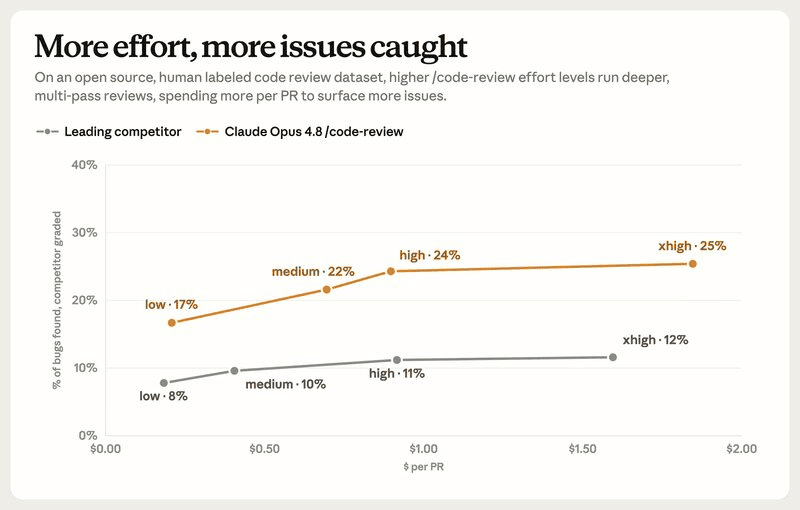
Instead of simply increasing how long the model “thinks,” Claude Code now offers five review levels: Low, Medium, High, X-high, and Ultra. Developers can choose a mode manually (for example, /code-review high) or let Claude select the most appropriate level automatically.
Low performs a fast pass over the modified files. Medium expands the review to the entire project, searches the repository for related code, and verifies potential issues before reporting them.
The biggest architectural change starts with High. Rather than relying on a single model session, Claude delegates bug discovery and validation to multiple independent AI agents, each working with a fresh context. This helps reduce anchoring bias, where a model is more likely to defend code it recently generated itself.
X-high goes a step further by analyzing how a change could affect the rest of the codebase instead of focusing only on the current diff.
The new Ultra mode runs in a cloud sandbox. Claude Code clones the repository or GitHub pull request, launches a team of specialized AI reviewers, and independently reproduces every reported issue before including it in the final report.
Ultra is currently available as a Research Preview. Pro and Max subscribers receive three free reviews, after which each run typically costs $5–20, depending on the size of the changes.
According to Anthropic’s internal benchmarks, review quality improves steadily as the analysis becomes more sophisticated. Using Claude Opus 4.8, the system detected roughly 17% of labeled bugs in Low mode, 22% in Medium, 24% in High, and 25% in X-high. Anthropic also reports that a competing system achieved between 8% and 12% on the same benchmark.
The company says Ultra Review is already being used internally to review every pull request before changes are merged.
Rather than relying solely on larger language models, Anthropic is betting on agent-based software engineering, where multiple specialized AI reviewers collaborate to analyze, validate, and verify code before it reaches production. This approach could become the next major step in AI-assisted development.
That’s a wrap for Friday Links #41.
The JavaScript ecosystem continues to move at an incredible pace. New runtimes are getting faster, AI coding workflows are becoming more sophisticated, and the tooling around TypeScript and modern web development keeps improving almost every week.
We’ll be back next Friday with another curated collection of the most interesting releases, libraries, engineering articles, and AI tools. Until then, happy coding, and don’t forget to star the projects you find useful.